




Research shows that children’s daily interactions with adults in the classroom and at home are critical to their development. So how can we measure the quality of these interactions in order to improve children’s learning outcomes globally?
This is the key question the Engage Toolkit aims to tackle.
The Engage Toolkit is a measurement tool for adult-child interactions across a variety of global contexts. Data collectors would use the toolkit to observe classroom or home interactions between adults and children, and then survey or interview students and teachers to learn more about their engagement. The data collected from the toolkit reflects areas where engagement is already improving children’s learning, and key areas for improvement.
The toolkit has been developed and tested by The LEGO Foundation, RTI International, NYU Global TIES for Children, and our partner on this work, Education Development Center (EDC). When we began our work with EDC, implementation partners around the globe—Streetchild, BRAC, JET, The Unlimited Child, and aeiTU—were also in the final stages of a second round of piloting the toolkit within their communities. Early studies had already shown a positive correlation between Engage measures and children’s learning outcomes, and the partners were preparing to share their findings with the world.
Unlike much of our branding or website-based work, which focuses on communicating about an organization, this project needed to communicate critical research to a global community of researchers and education leaders who could build on this foundational research and use the Engage Toolkit to transform children’s learning outcomes worldwide. Here are four main takeaways from our experience building a global communications plan with EDC.
#1. Learn and listen directly from the people doing the work and bringing your communications plan to life.
The Engage Toolkit was developed through rigorous research and testing across global contexts with implementation partners working in early childhood care centers, primary schools, refugee settlements, and with parents at home. This process was critical for Engage partners to arrive at meaningful, culturally relevant insights—and it became a model for our team to follow a similarly robust discovery process.
Our first step in the project was to connect directly with Engage partners around the world to hear more about their experiences using the toolkit and communicating about it in their local contexts. Our Senior Digital Strategist, Kaylee Gardner, conducted thirteen interviews with both implementation and research partners from Bangladesh, Colombia, Sierra Leone, Uganda, South Africa, and the United States.
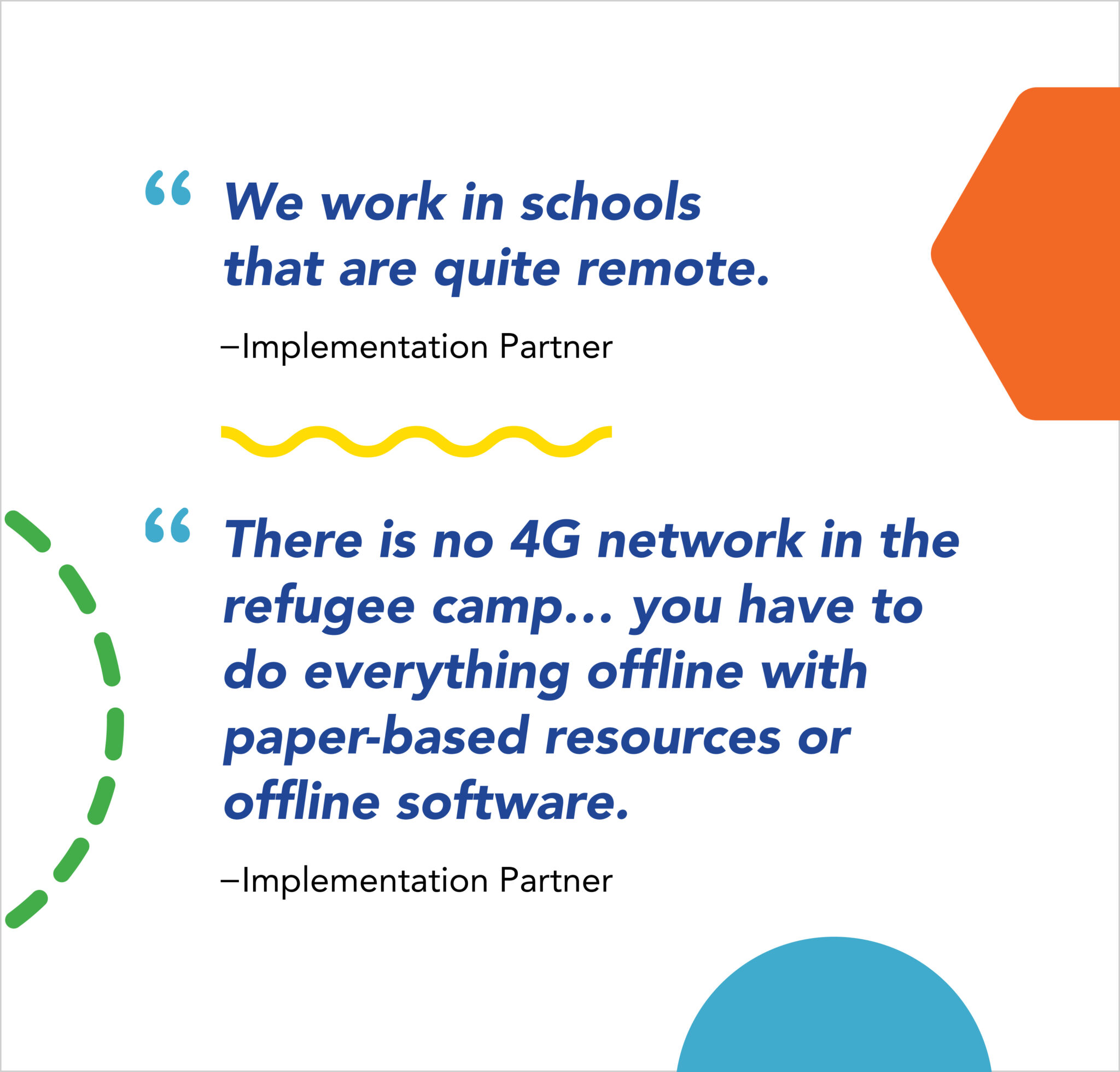
In these interviews, we learned about the barriers to adoption that education leaders faced when implementing the toolkit, as well as key cultural considerations for its use. Some of what we learned from interviewees could be directly addressed in our future communications plan—like the need for an easy-to-use presentation on the Engage Toolkit for partners in more formal meetings with decision-making audiences, such as government officials or funding partners. Other barriers to adoption could not be directly addressed through communications, but provided further insight into how the toolkit can be optimized for use in a wide variety of contexts.
#2. Clearly define and align around your communications goals, key audiences, and their needs before you begin.
Designed to ultimately improve children’s learning outcomes, the Engage Toolkit requires the participation and buy-in of many stakeholders along the way. From the school leaders and government agencies that choose to implement it, to the parents and teachers who must participate, and the education researchers who would benefit from Engage’s findings, we needed to clearly identify our communication goals, key audiences, and their needs to build a successful plan. First, we mapped out the audience ecosystem. Next, we arrived at four key outcomes that all of the created communications materials would need to map to:
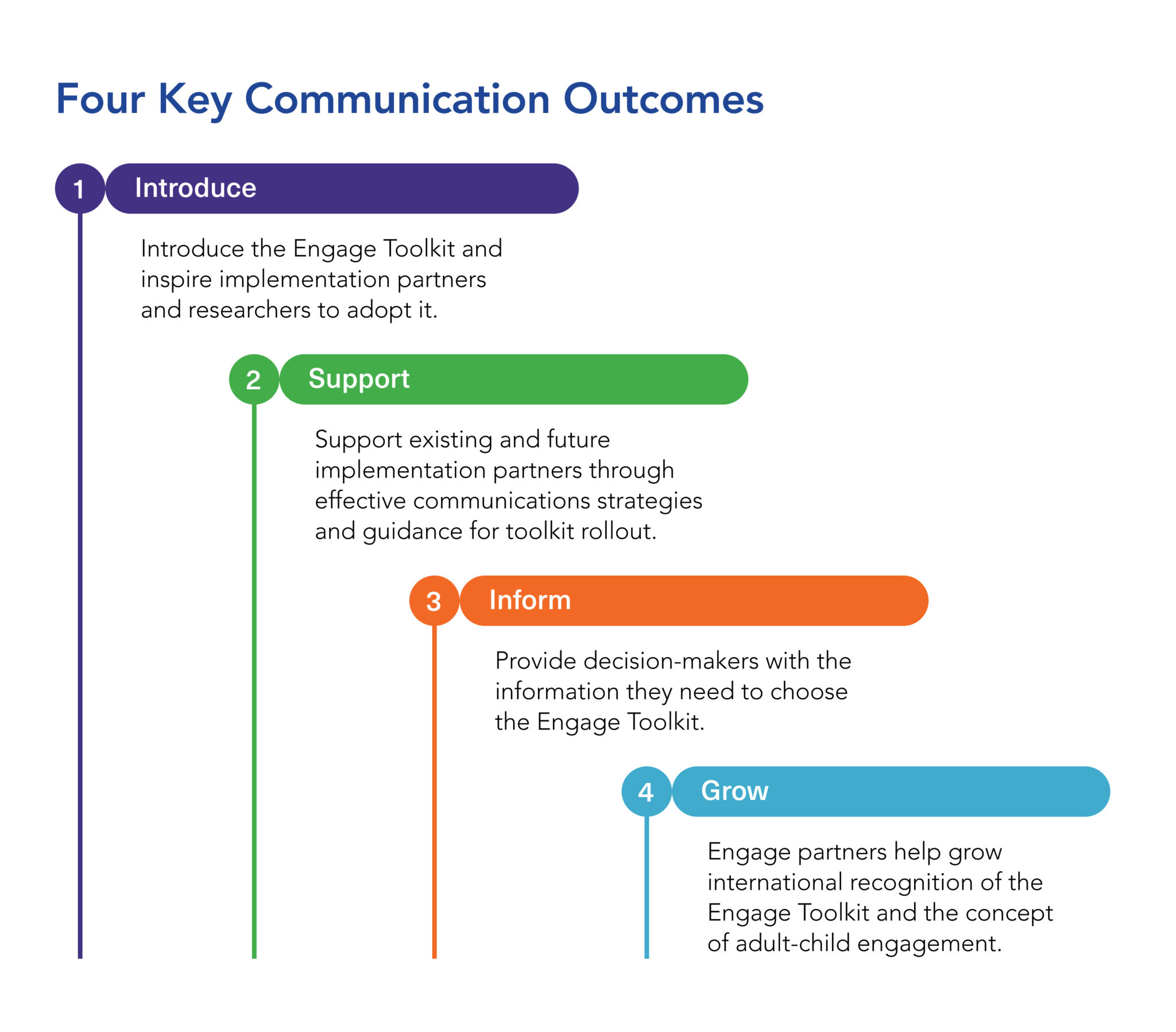
While these outcomes were no small undertaking, it was critical for us to define our most tangible and aspirational goals before creating communications materials. By doing so, we were able to focus our messaging and determine the best formats for achieving these outcomes based on what we knew about our various audiences and their specific needs.
Once we had determined our roadmap for the future, we returned to the group of Engage partners to present these outcomes and invite their feedback before we began executing our plan. Kaylee virtually joined the team and presented our progress and next steps to a ballroom full of partners at the Engage Community of Learning meeting in Colombia. This moment was critical to gain the buy-in of existing partners early on and gather their input so that our communications materials were grounded in the true needs, goals, and realities of those who would bring it to life.
#3. Write for understanding, not just what sounds nice.
One of the greatest challenges of this work was that many implementation partners needed to have the flexibility to translate all materials into their local dialects. Communicating across different cultural contexts, with translations in mind, puts into focus what is most important to communicate—and the importance of doing so clearly, even when it may sound less quippy.
When writing for the Engage Toolkit, we referenced our discovery process and used messaging to clearly answer the questions that mattered most to partners and researchers:
- Why focus on engagement?
- What does it look like to measure adult-child engagement?
- How does the Engage Toolkit impact my classroom or school?
- What are the benefits of the Engage Toolkit?
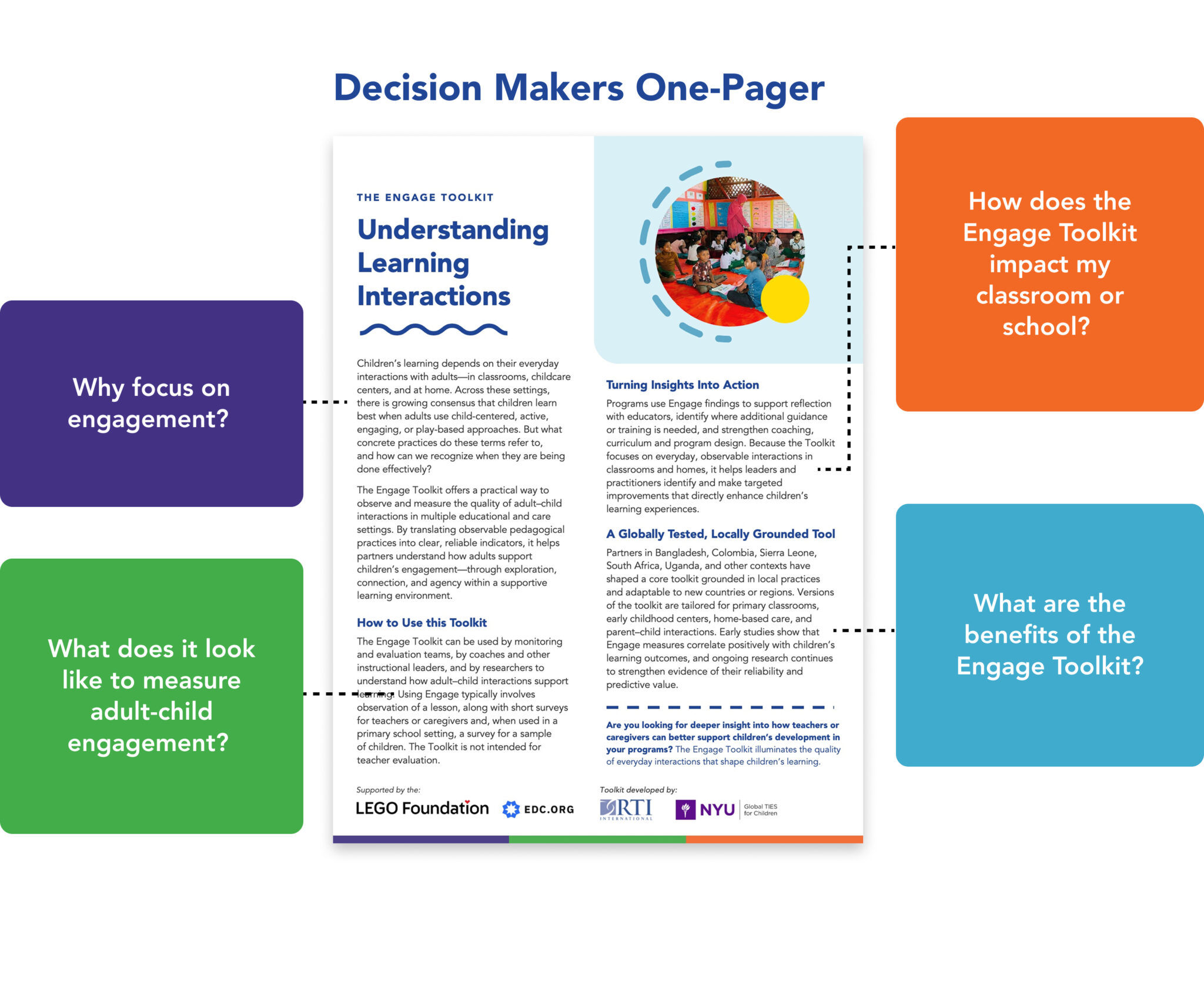
By focusing our messaging on these core questions and needs, we were able to dispel misconceptions, quickly provide the information people wanted, and ultimately help them envision the value of the Engage Toolkit within their own learning communities. As we wrote content, we evaluated the importance of every sentence and word—knowing that if our language didn’t help build understanding or establish the toolkit’s credibility, then it would only add to the confusion and create additional barriers to adoption.
#4. Develop marketing materials that solve messaging gaps and build for flexibility.
In addition to translations, we also had to identify and account for one of the largest communications barriers to adoption: people simply couldn’t conceptualize what the Engage Toolkit was and how it would look in their classrooms. While we were able to address this through messaging, we also chose formats that would help visually communicate and illustrate the toolkit process.
We developed a series of four videos that introduced the Engage Toolkit, explained the four constructs of engagement it measures, and illustrated the steps needed to implement the toolkit. These videos became the focal point of our communications plan and a valuable asset that partners could utilize in a variety of settings.
Alongside the four videos, we developed presentation decks, one pagers, infographics, social media templates, and a detailed communications strategy brief and rollout campaign that empowered partners to use these assets across a variety of formal and informal settings.
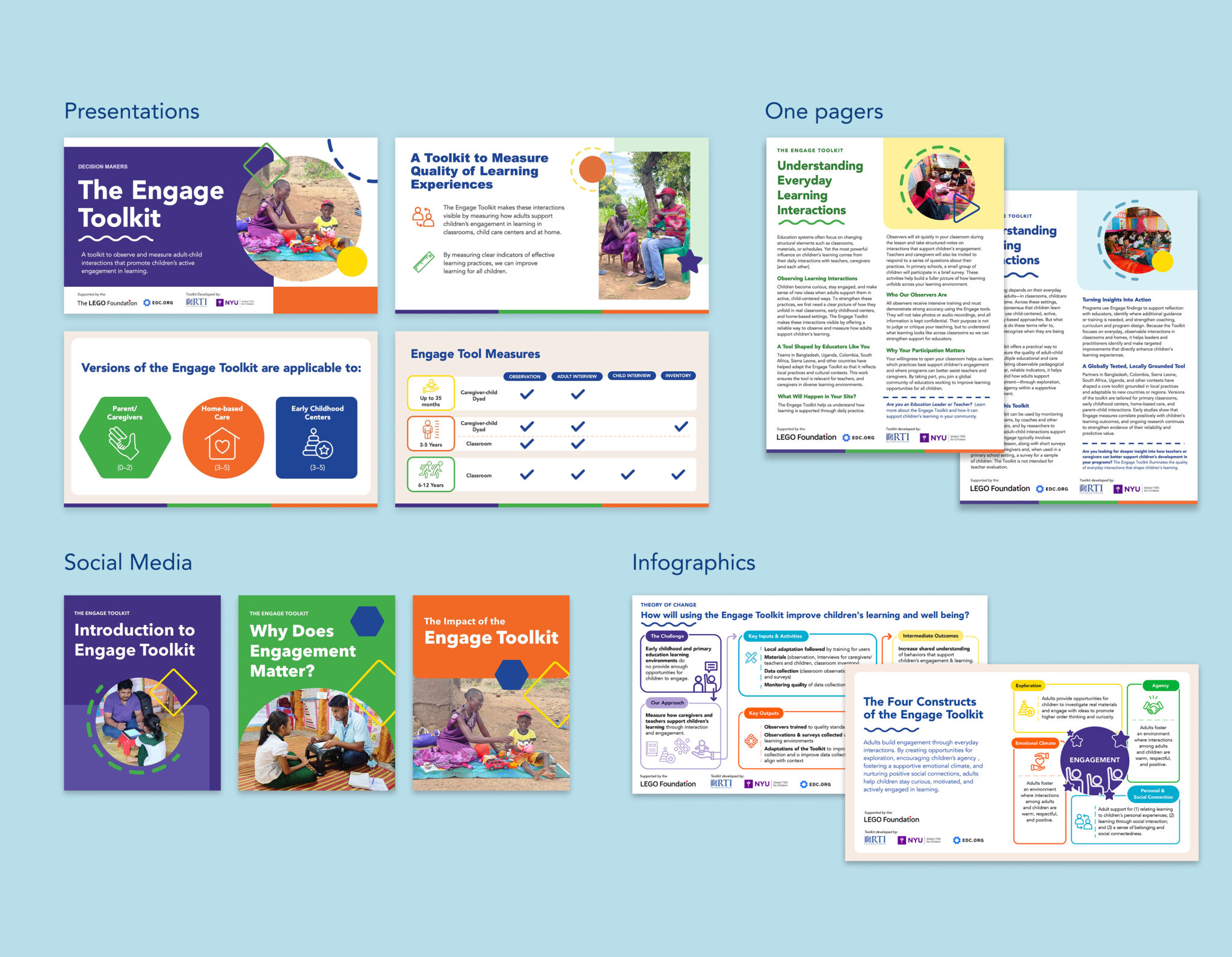
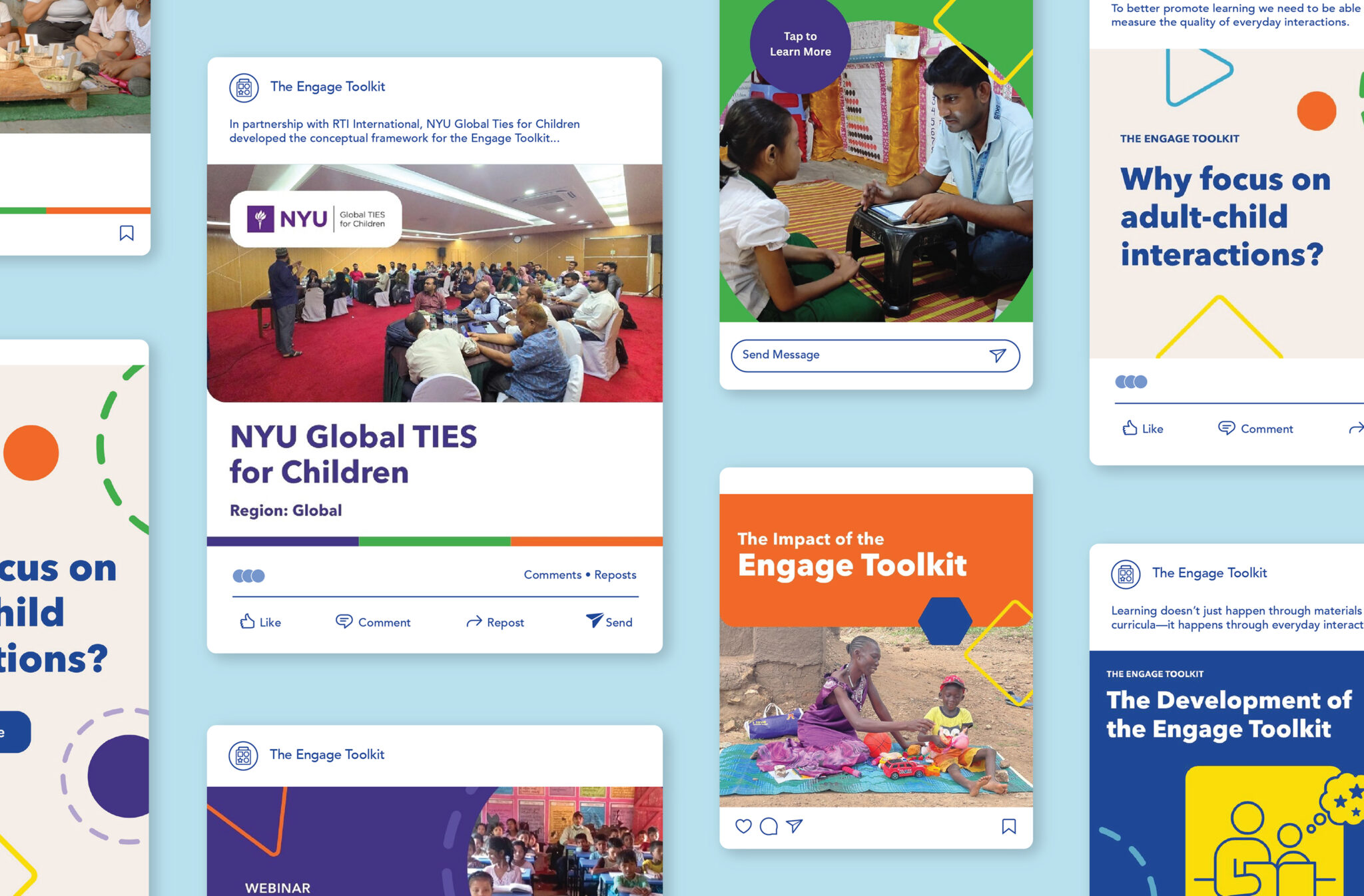
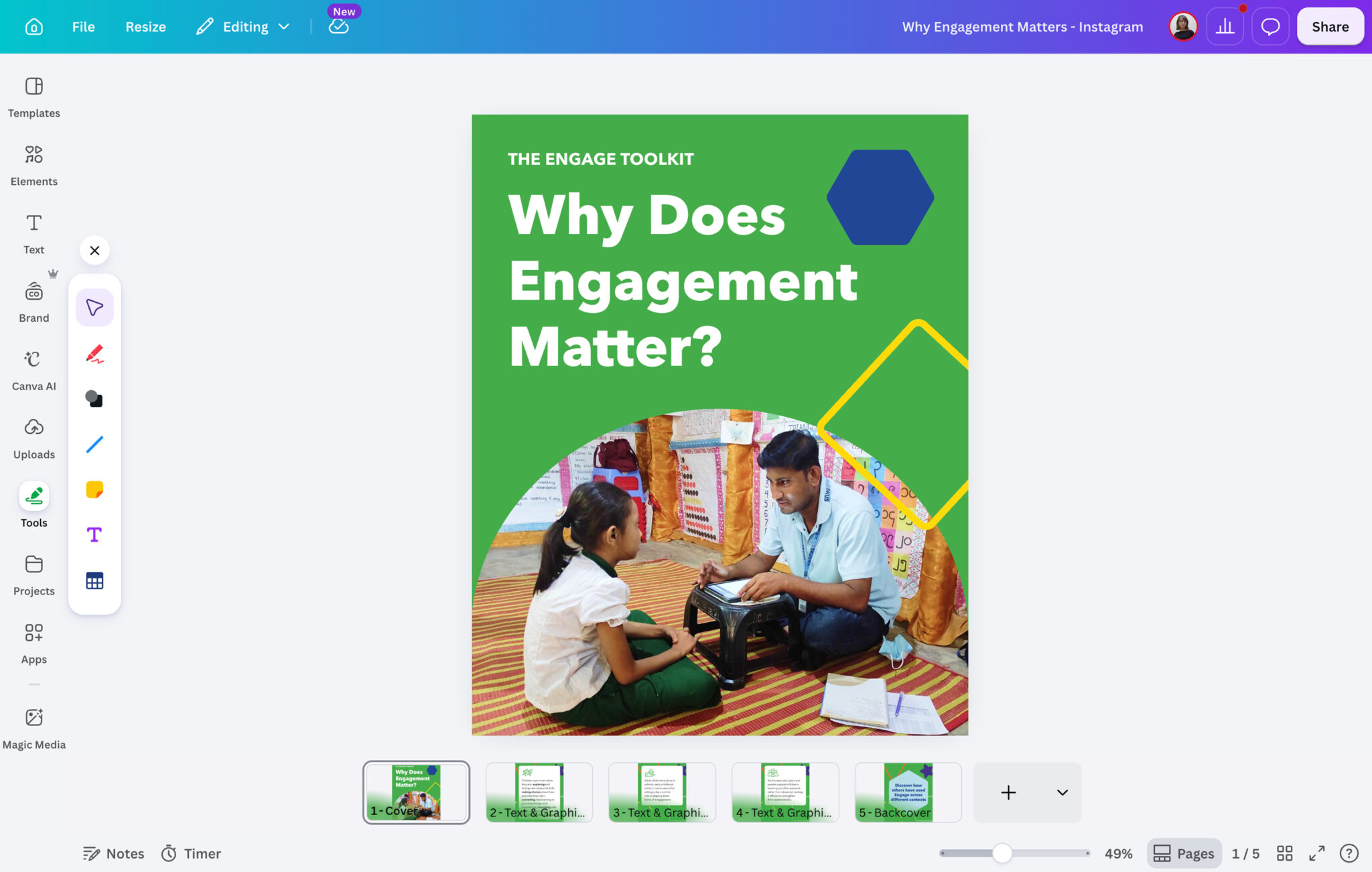
The materials we developed also came with how-to guides that made it easy for partners to edit and translate them into local dialects. We built presentations to be modular so that information could easily be included or removed depending on a partner’s needs for specific meetings, and easily editable text fields for translation.
We also templatized assets where possible, polling partners to understand the tools they typically used to create and edit communications documents. In some geographic areas, a lack of reliable internet access created additional barriers to communication, so we designed it with downloadable templates in mind, allowing partners to edit locally offline. We also included raw brand and photography assets with instructions for recreating materials across software.
Rather than just delivering a bunch of communications materials, we delivered a toolkit in its own right—providing partners with the materials, messaging, and support they needed to bring the Engage Toolkit to life within their own communities.
Building a successful communications plan starts and ends with knowing your audiences.
Working with EDC and its partners provided our team with unique insight into the deeply personal impact that Engage has already had on teachers and students worldwide, in addition to the transformative potential the toolkit findings hold for researchers. By working directly with the people who built and tested the toolkit, we became part of the pilot process and were able to fully understand the different contexts, needs, challenges, and opportunities of the target audiences. Every step of the way, we went back to our audiences to listen, learn, and confirm the best path forward.
At Constructive, we find that the discovery process is often the deciding factor for a project’s success. When you invest the time to truly engage with your audiences rather than pulling together assumption-based audience personas, you gain insights that can change the entire trajectory or plan of work. Even after conducting hundreds of interviews across our partners and projects, interviewees still consistently surprise us. And especially when building a global communications plan, you have to truly understand the barriers people face to choose the right marketing messages and materials that will help audiences envision their lives—and classrooms—differently with the Engage Toolkit.
Want to learn more about how we work with organizations to bring their messaging to life? Get in touch!
