



It’s often said that a picture is worth a thousand words. A compelling photograph can instantly communicate a nonprofit’s mission and work to new people. But many nonprofit organizations are multifaceted and do many different types of work. Relying on a single image might actually be harmful when trying to communicate everything an organization does. Which is why collage—creating a composition of multiple images and visual elements—can be the most effective strategy for communicating social impact in a more authentic and grounded way.
Think about when you’ve made collages in the past. Many times, people assemble traditional collages while creating moodboards or tap into their inner well to visualize something larger than the scraps of paper. The process can reveal your deeper vision, which is why using collage for nonprofit organizations can speak to their more aspirational vision for the future. Nonprofits can curate what imagery represents their larger worldview. We’ve even developed a rigorous bespoke collage system for FrameWorks Institute that captures the layered complexity of their cultural mindsets research.
If that didn’t convince you, here are three more reasons why you should consider including a collage approach in your brand storytelling.
1. Collages Communicate Complex Narratives
Placing certain images next to each other can create new meaning from the sum of its parts. All images hold meaning in our minds. Think about iconography like a gavel, a pile of money, and a set of gears. Isolated, each image represents a different idea. A gavel for justice, money for wealth, and a set of gears to reflect some larger system. But when arranged next to each other, a new meaning is filled in about how Americans think the system is rigged by the wealthy elites using the justice system. The ability to combine images can communicate larger, more complex narratives that might not be possible using a single image.

2. Collages Allow You to Intentionally Choose Which Images to Include or Exclude
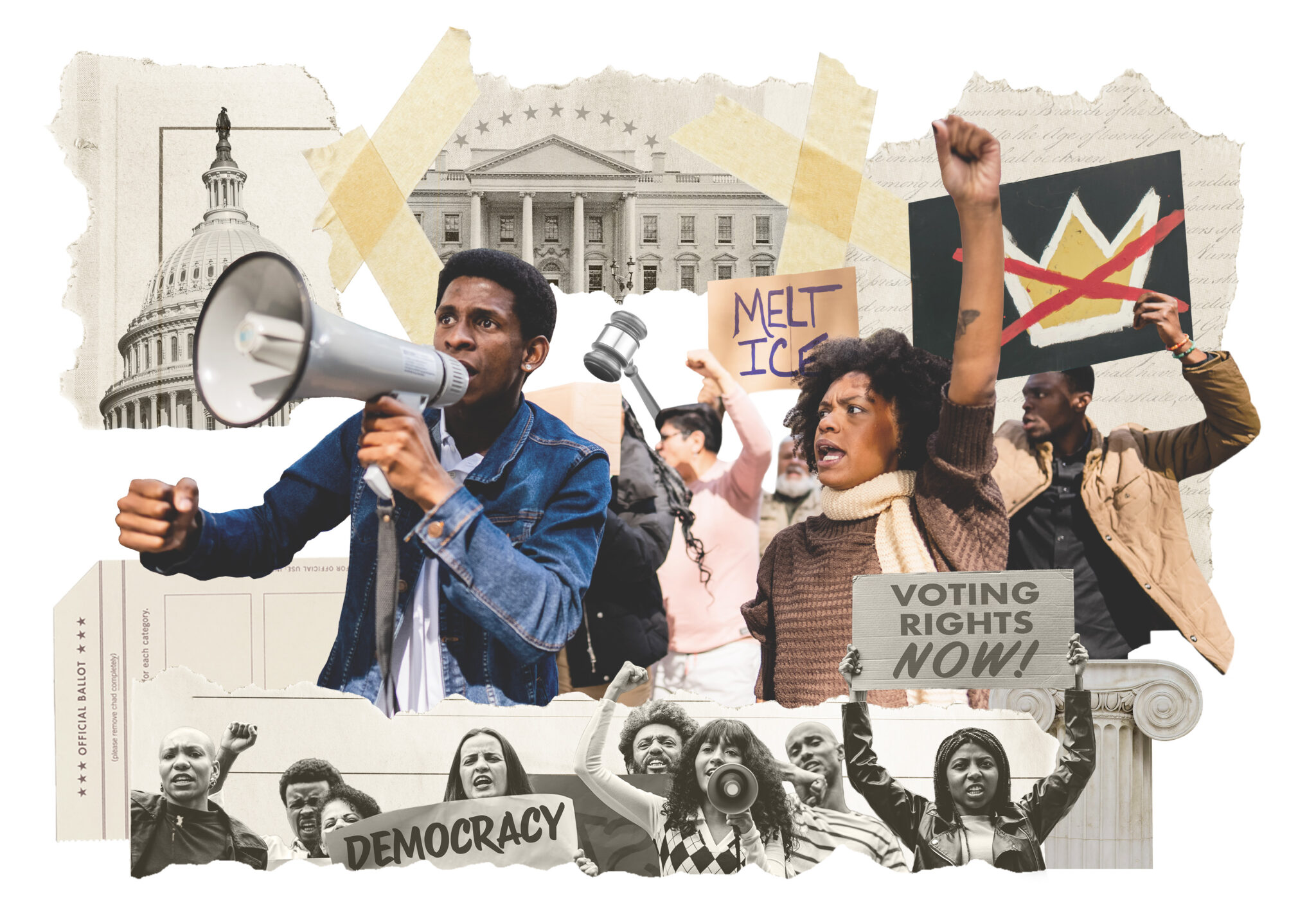
Choosing the right photos is crucial when creating any collage, but it’s especially important when creating aspirational imagery that communicates certain values we want to uphold. One of the first steps of the collaboration process is to align with our partners on the types of images we should use. Images signal a multitude of hidden biases, so it’s important to understand what exactly each image represents to the intended audience and the general public. What might seem neutral to some could be suggestive to other folks. FrameWorks has been a thoughtful collaborator in this photo selection process since their work centers on how to frame certain mindsets, like collectivism and systems thinking. Most of the collages center on more productive solution-based imagery rather than images that signal harmful mindsets like individualism and fatalism.

3. Collage Techniques Can Speak to Your Own Methodology
One major benefit of creating a collage system is that you can incorporate traditional mixed-media techniques like torn edges, textures, and analog artifacts to communicate your own perspective on a subject matter. We found that including actual graphs from the reports can add a layer of authenticity to the visual storytelling by referencing the rigorous research process that informs the report’s content.
The Reframing History collage features a timeline with pushpins in the background to illustrate the report’s main thesis that the way to teach history successfully in today’s political climate is by “acting like a detective,” investigating how past events connect to the present and future. Collage, at the end of the day, is a mixed-media approach that benefits from combining different forms of visual information.

Putting the Pieces Together: What’s the Process of Co-creating Collages?
In the traditional sense, collage is rooted in the depiction of personal experience. So, how do we collaborate with clients to ensure we are accurately visualizing their shared values and experiences? Collaboration can take time, but we found active participation often yields better, more interesting results.
Here’s an overview of how we’ve collaborated with clients on creating collages:
1. Ask Questions About the Research
Asking all in-the-weeds questions and aligning on the overall vision will expedite the creative process tenfold. Here are some alignment questions we ask:
- What’s the “elevator pitch” for this research?
- What imagery would you like to show or avoid on the cover?
- Are there any cultural considerations or social and community groups that should be featured in imagery to ensure the collage is properly representative?
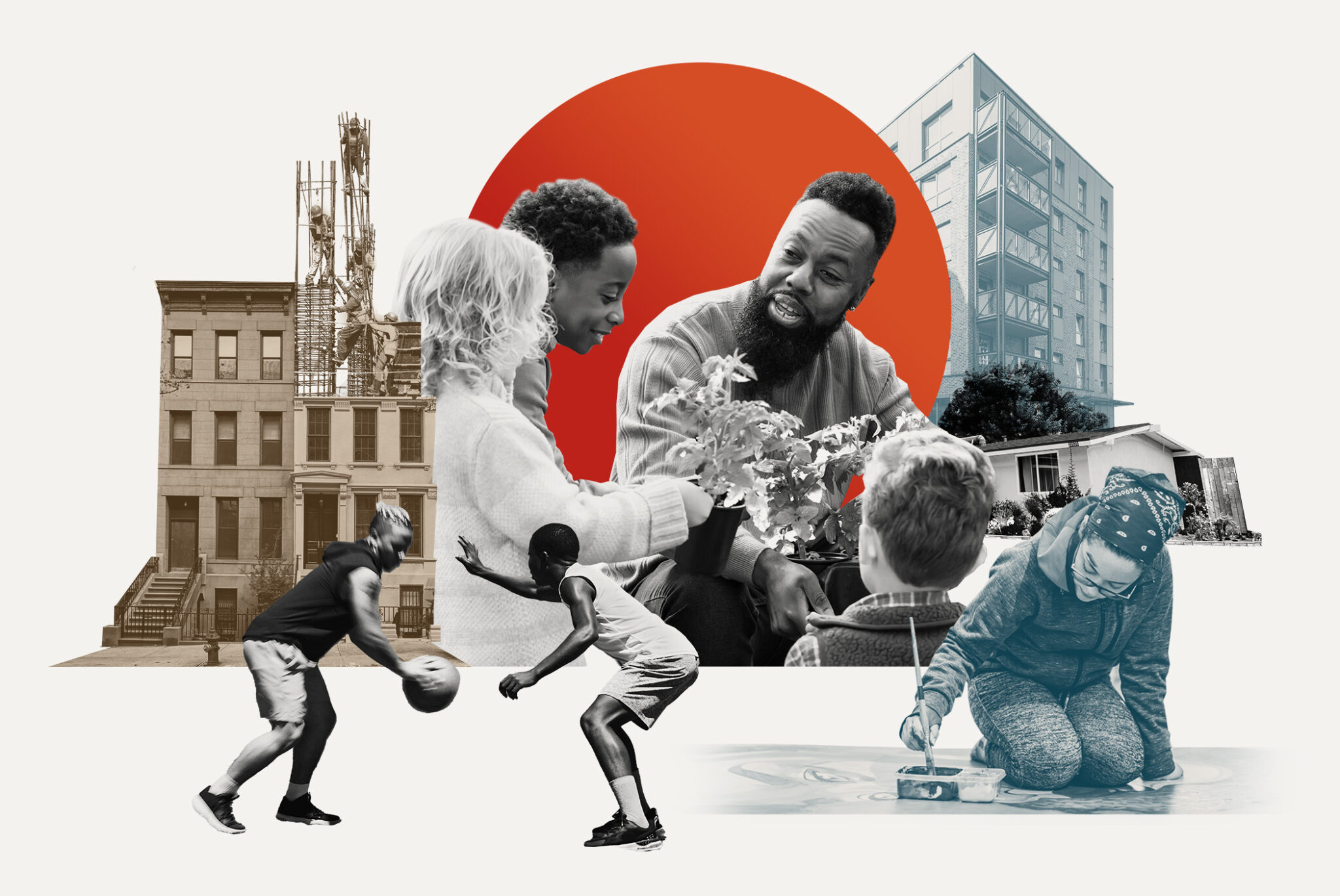
Understanding an author and an organization’s point of view on their work informs how we approach a collage. Some topics, like democracy, might warrant a messier layout approach to signal the complexities of civil engagement. Understanding the content and nuance now is important for the next step: sourcing appropriate imagery.
2. Source Images and Sketch Layout Ideas
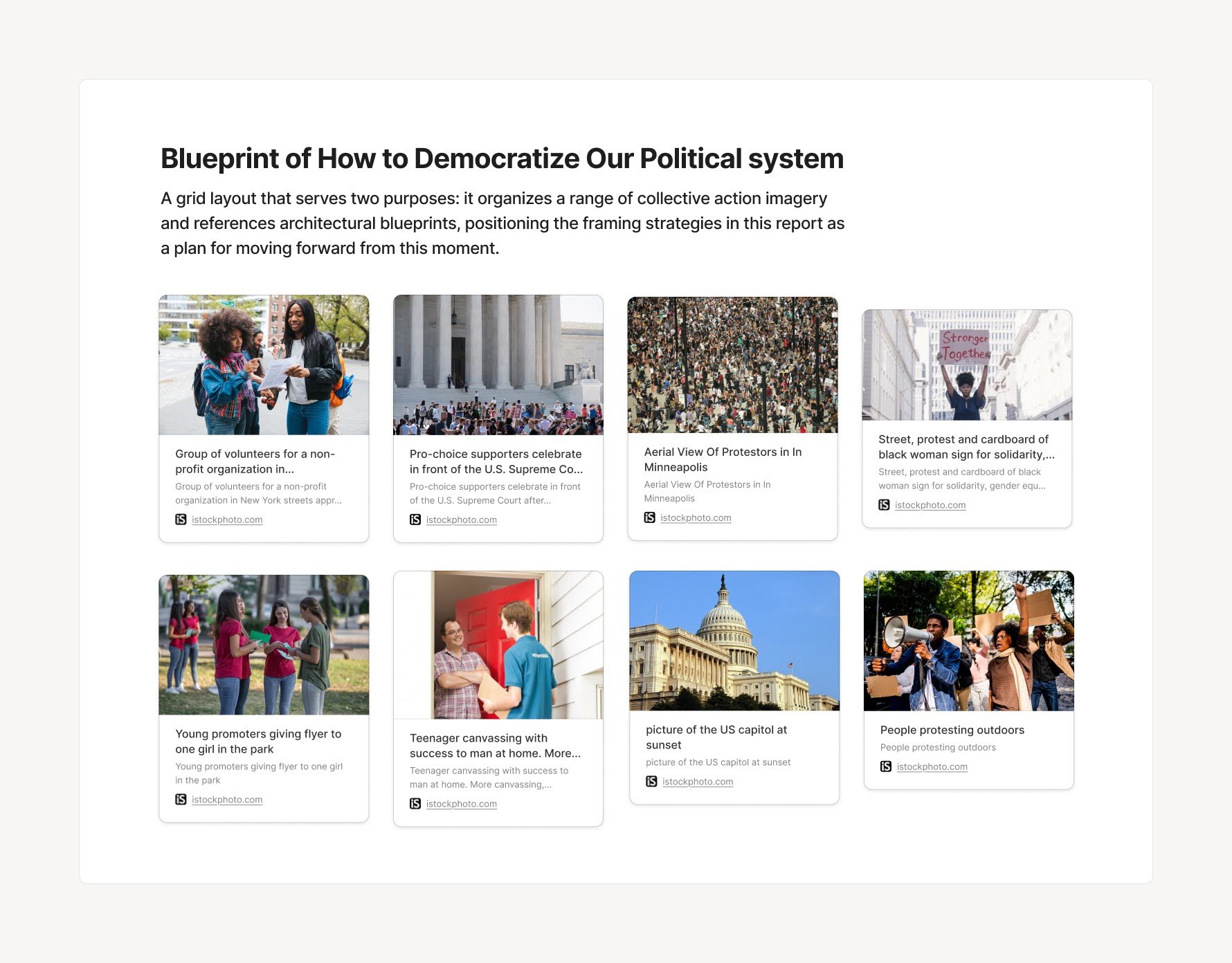
Like sifting through a magazine for images to cut out, like in traditional collage work, we usually source around 50-100 images spanning different aspects of the research. It’s important to get initial sign-off on photo selection so we don’t spend too much time using images that might misalign with a client’s brand narrative. Finding as many relevant images as possible now can be helpful because you often don’t know what could spark an idea later. We also discovered it’s important to sometimes gather slight variations in case we need to swap an image out while composing the layout.
We also start thinking about rough concepts for how we could arrange the images. It’s usually a rough pencil sketch of an idea to show layout ideas. Pairing the sketch with sourced images can be enough for clients to understand if an idea is working. This step can often take several rounds of feedback to nail down the right imagery and concept, but it can significantly reduce production time before we do any digital design work.
3. Start Arranging Images
After we agree on some key images, we start arranging the photos in several different layout options. Assembling a collage can be a bit like putting a puzzle together, but that’s what makes the process exciting. Figuring out how the images relate to each other and playing with the proportions can begin to create visual narratives. This step is often the longest and most challenging because it requires the greatest amount of active collaboration between the author and designer, but it can be rewarding to see how each iteration improves with each round of collaborative feedback.
To Wrap Up
You might be wondering why go through the hassle of co-creating a complex collage when using a single image would be so much quicker.
The bottom line is that collage allows us to create imagery that’s more closely aligned with your brand narrative, which is an increasingly important factor in differentiating your editorial perspective from other competitors online. Finding ways to mix imagery with your brand’s design system can be an extremely powerful communication tool. If you’re looking for a way to elevate your important online content, like research or impact reports, it might make sense to explore using collages to illustrate your brand’s unique story and perspective.
